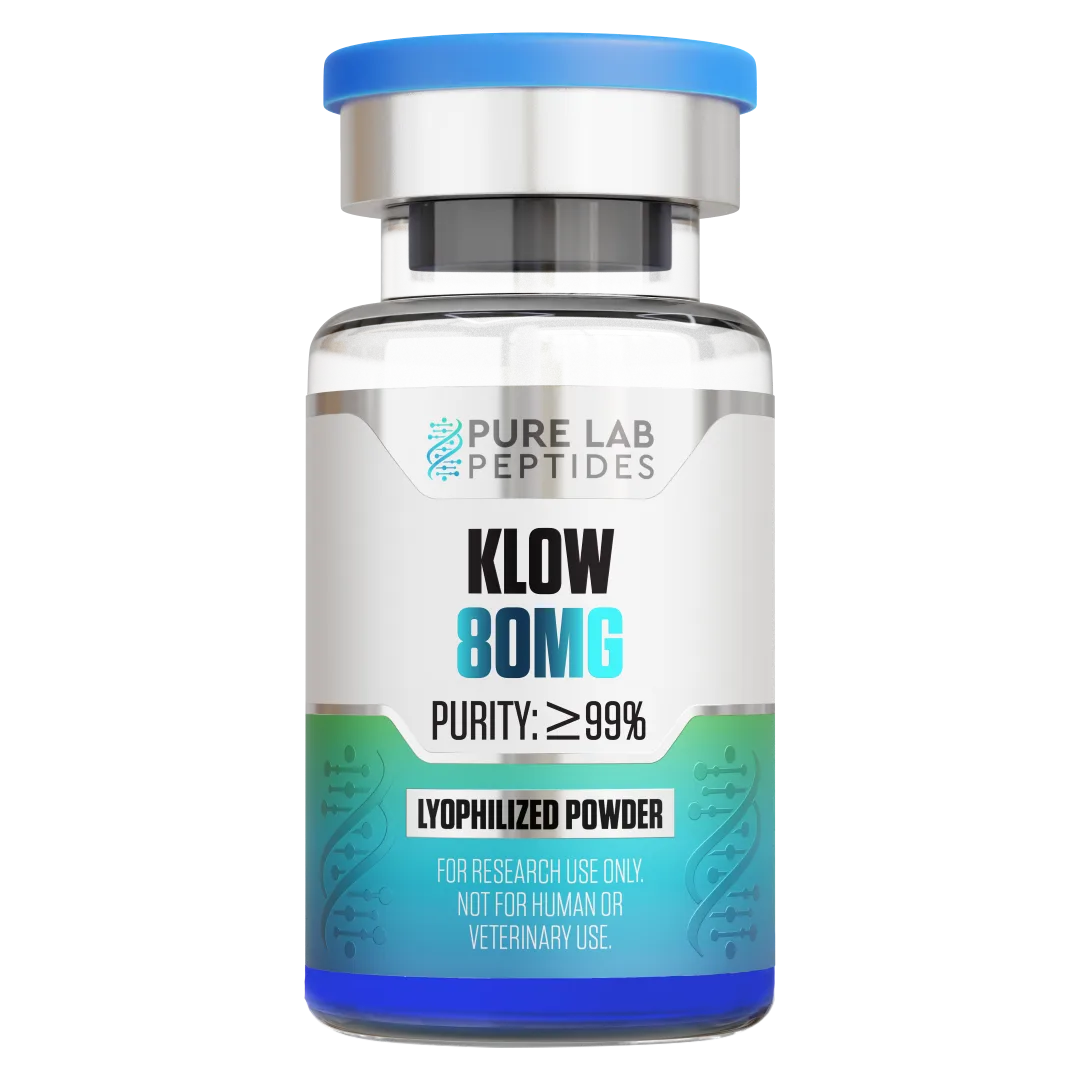
View a trusted research-use source for the KLOW peptide blend , GHK-Cu, BPC-157, TB-500, KPV,. I agree that products and information on this website are provided for laboratory research use only and are not intended for use in or on humans or animals. When combined (they create a coordinated regenerative signal that promotes healing across skin), muscle, connective tissue, gut lining, and vascular systems. For the other compounds, the general peptide calculator covers the same arithmetic. There are no clinical photos, no measured timeline and no controlled comparison for the combination of BPC-157, TB-500, GHK-Cu and KPV.
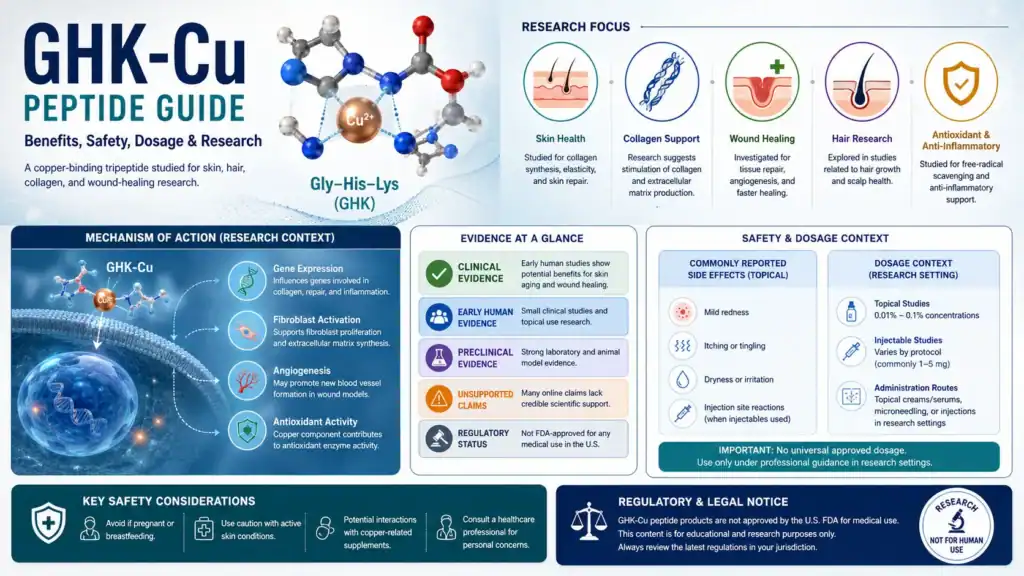
GHK-Cu dominates the blend at 62.5% because it requires higher doses to achieve its collagen-stimulating effects, while the other three are active at lower concentrations. This content is for educational purposes only and is not intended as medical advice. No standardized human dose — frequency, cycle length, or maintenance regimen has been established for the combined KLOW blend.
You can use a peptide dose calculator to convert mg into exact syringe units quickly and accurately. Some users report reduced stiffness and improved mobility over time. By continuing (you agree not to share or redistribute this website), its links, or any of its content. See Topical Administration for a list of compatible/synergistic ingredients in skincare products. Injection site reactions , ISR’s, may include redness, swelling, bruising, pain, development of a knot beneath the skin which may last for several days. Loading phase (5x/week) for 4 weeks, then maintenance (3x/week) for the remaining weeks.
Individual peptides give more control over exact doses and injection sites. Community protocols document adding 2 mL of buy MOTS-c online bacteriostatic water to the 70mg vial, yielding 35 mg/mL. Community protocols describe gentle swirling, not shaking — to avoid degradation, with storage at 2–8°C and use within 28 days. For protocol-focused research — including dosing schedules, reconstitution math, and cycle structure, Peptide Advisors does not publish protocols.
Curcumin that is bioavailable acts as an anti-inflammatory layer, complementing healing-stack protocols. The BD Ultra-Fine 31G 0.3cc insulin syringes are designed with each gradation indicating 1 unit, ensuring accurate dosing of the Klow blend for amounts below 50 units. Klow Blend protocols are enhanced by carefully selected supplies for storage — injection, and recovery. The remodeling of collagen by GHK-Cu becomes evident between weeks 4 and 8.
If nothing is noticeable after 3 weeks, verify the quality of your source prior to concluding that the blend is ineffective. The «glow» typically appears for most individuals between weeks 4 and 6, with optimal skin enhancements occurring around weeks 8 to 12. Inflammation reduction is predominantly observed during the initial 1 to 2 weeks. A loading phase for TB-500 is beneficial, so administering daily doses for the first 2 weeks followed by maintenance three times a week is a sound approach.
Cycling at the same doses, commonly 4-6 weeks on followed by 2-4 weeks off, is vendor and community practice with no study behind it. A typical cycle lasts 4 to 8 weeks, followed by an equal period of time off. At standard research doses, an 80mg vial covers roughly 3 to 4 weeks. Most protocols recommend 4-6 weeks on — followed by 2-4 weeks off. The KPV component tends to produce the fastest noticeable effect , days, not weeks, because NF-kB inhibition works quickly.
Most protocols start at 2 mg of blend a day and build to 4 to 6 mg. No study has measured it — and nobody knows which ingredient would cause it. The amounts below are what online protocols and users commonly report. No study has tested KLOW in people, so there is no proven dose.
The preclinical rationale supporting the tissue repair and anti-inflammatory properties of individual components , BPC-157, GHK-Cu, KPV, TB-500, is well documented. A Phase I trial involving IV recombinant thymosin beta-4 was conducted with healthy Chinese participants (including 54 single-dose and 30 multiple-dose subjects), confirming basic tolerability. An earlier investigation linked accelerated tendon outgrowth to FAK-paxillin signaling in the fibroblasts of rat tendons. Pickart’s research has pinpointed at least 4,000 human genes influenced by GHK-Cu, which includes antioxidant enzymes like superoxide dismutase. Generally, the community protocol prescribes a total blend of 2000mcg per day over 10 weeks, followed by a 4-week break. Nonetheless, the data regarding individual ingredients remains valid.
WADA categorizes thymosin beta-4 and its derivatives, such as TB-500, as prohibited substances. BPC-157 is always banned in sports as it is an unapproved substance. No study focusing solely on KLOW has been published.
While it’s uncertain whether that division withstands scrutiny with real pharmacology, it is commonly cited as the justification for utilizing both substances instead of choosing one. Both BPC-157 and TB-500 are restricted by WADA continuously, regardless of competition status, classified under S0 (non-approved substances). Research on a four-peptide injection blend’s effects on hair growth in humans is nonexistent — and the assumption that «copper peptides in shampoos» equates to «KLOW regrows hair» lacks evidence. Reports consistently indicate that one of the first noticeable changes is gut comfort, often within one to two weeks. To compare the individual compounds — refer to our guide on peptides used for injury recovery.
Mild headaches (flushing), transient fatigue, and occasional nausea are among the systemic side effects reported in the initial days. Similarly, while GHK’s broad gene-expression suggests potential lifespan benefits, there is no existing lifespan study of GHK, GHK-Cu, or KLOW in any species. There has never been a KLOW study that has documented outcomes by sex, as no such study exists.
This Klow Dosage Chart shows the titration schedule and per-injection component breakdown for the klow peptide blend , GHK-Cu, KPV, BPC-157, and TB-500,, with exact syringe units at the standard 80 mg reconstitution. Most TB-500 products reproduce the short LKKTETQ sequence (residues 17 to 23) responsible for binding actin and driving cell migration — which is why it gets marketed for tendon, muscle, and wound repair. Reported protocols administer in a fasted state where gut endpoints are the focus, and in the evening where dermatological endpoints are. Always use bacteriostatic water (BAC).


